Pedestrian Walkways
Hatched or edge-lined walkways from entrances, lunchrooms and washrooms to work areas, kept apart from forklift routes.
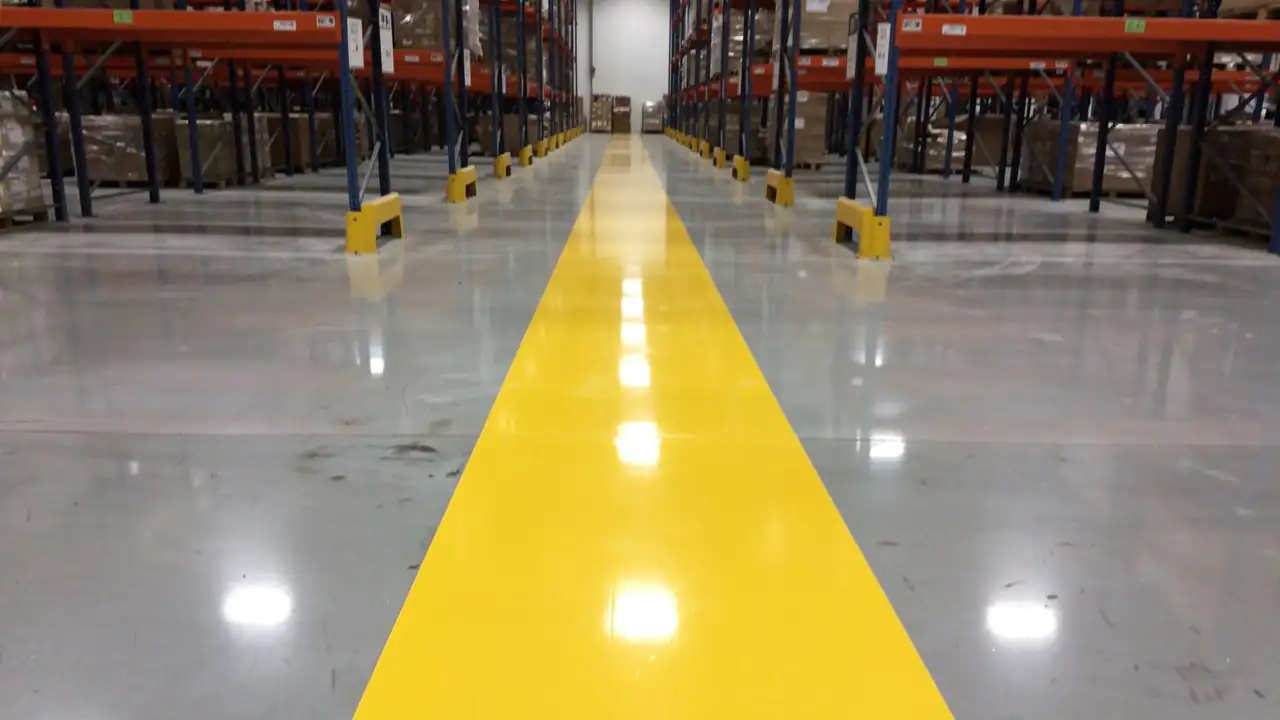
Warehouse and plant floor marking
Kitchener Parking Lot Line Painting Pros marks warehouse and plant floors so forklifts and people can share the same space safely. We paint pedestrian walkways, forklift lanes, pallet and racking zones, dock areas and equipment clearances for manufacturers, distributors and 3PL warehouses across Waterloo Region.
Our clients are operations managers, plant engineers and joint health and safety committees who need floor markings that survive lift truck traffic and go down without stopping production. We paint during weekend shutdowns, night shifts and planned maintenance windows.
Since 2015 we have completed more than 550 line painting jobs, from Kitchener's Huron Business Park to the logistics buildings along Highway 401 in Cambridge. Floor marking is where prep matters most, because a line that peels in a warehouse fails in weeks, not seasons.
Our services
We mark every part of a warehouse or plant floor that tells people and machines where to go, where to stop and what to keep clear. Most facilities start with walkways and forklift lanes, then add zone markings as layouts settle.
Hatched or edge-lined walkways from entrances, lunchrooms and washrooms to work areas, kept apart from forklift routes.
Lane edges, direction arrows, stop bars at blind corners and crossings where walkways meet traffic.
Pallet squares, corner marks, racking aisle edges and flue space lines that keep loads out of the travel path.
Staging lanes, door numbers, dock edge hazard stripes and keep-clear zones in front of each door.
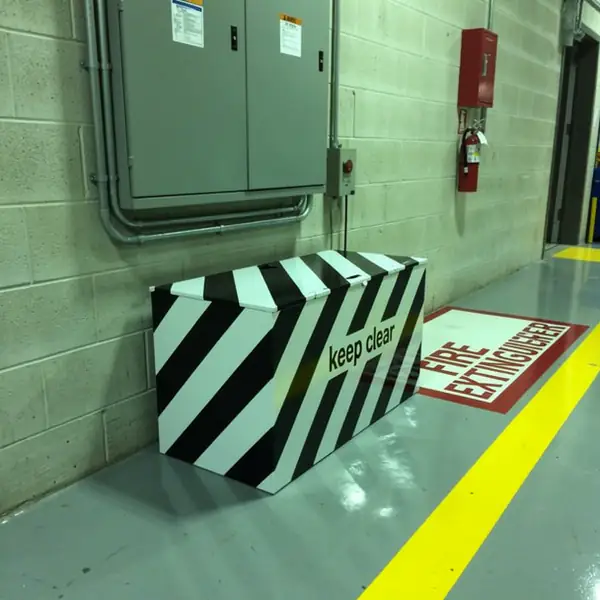
Hatched keep-clear boxes in front of panels, disconnects and transformers so nothing gets parked there.
Red and white zones around extinguishers, hose cabinets, sprinkler risers and exit doors.
Ontario rules
In Ontario, warehouse floor safety falls under the Occupational Health and Safety Act and Regulation 851 for Industrial Establishments, not US OSHA rules. Many floor marking websites quote American OSHA standards, which do not apply to a workplace in Kitchener.
The Ontario regulation requires employers to keep floors and aisles free of obstructions and hazards and to control how lift trucks and other vehicles move around workers. It does not prescribe line colours or widths, so floor markings are one of the tools employers use to meet those duties.
Fire equipment and exits must also stay clear under the Ontario Fire Code, and electrical equipment needs clear working space in front of it. Painted keep-clear zones make both visible to every driver on every shift.
We paint to the layout your safety lead or joint health and safety committee approves. If you do not have one yet, we draft it with you on the walkthrough.
Colours
Most warehouses use yellow for traffic lanes and walkways, white for equipment and racking, and red for fire equipment. These are widely used industry conventions, not an Ontario-mandated code, so pick a scheme, write it into your safety program and use it everywhere.
| Colour | Common use |
|---|---|
| Yellow | Forklift lanes, aisle edges, walkways and general caution |
| White | Racking, workstations, carts and equipment positions |
| Green | Finished goods, safety stations and first aid |
| Blue | Raw materials and work in progress |
| Orange | Material held for inspection |
| Red | Fire equipment, scrap, defects and red-tag areas |
| Black and white | Areas that must be kept clear for operations |
| Red and white | Keep clear around fire equipment, electrical panels and exits |
| Yellow and black | Physical hazards: dock edges, column bases, low clearances |
The same conventions carry outside to truck courts and dock aprons, which our hazard and warning markings service covers.
Systems
Epoxy lasts longest under forklifts, fast-cure paint gets the floor back soonest, and tape suits layouts that will change. The right system depends on traffic, how long you can close an aisle, and how permanent the layout is.
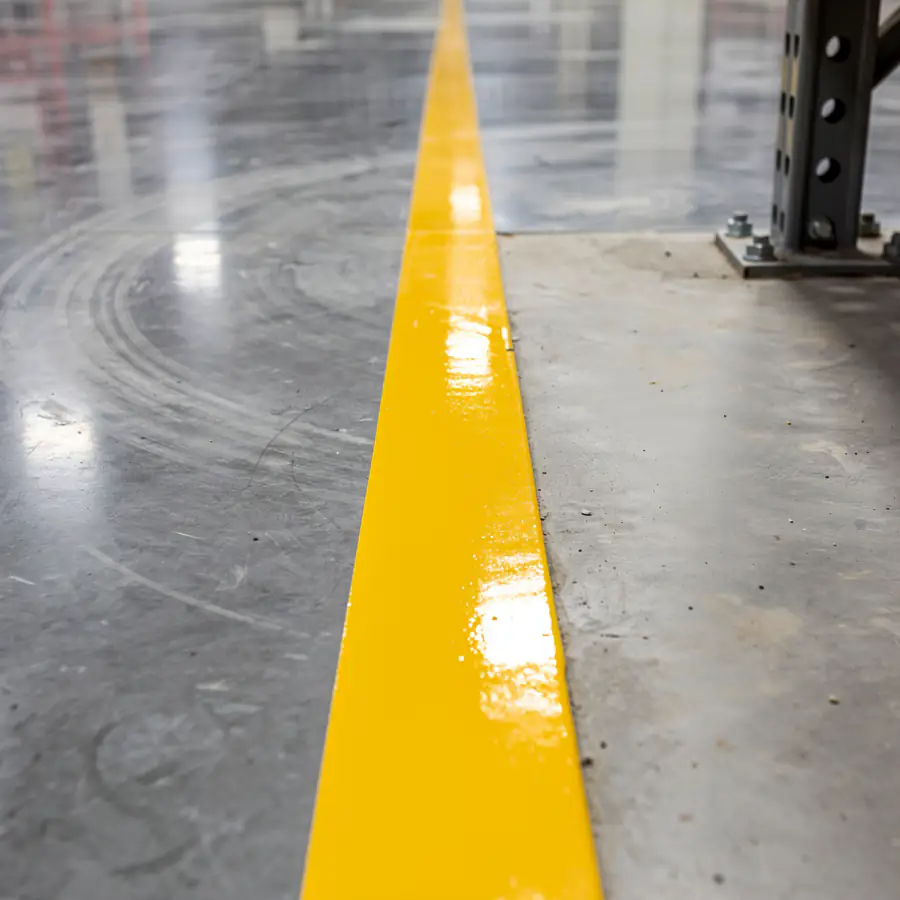
Two-part epoxy and polyurea line coatings are the hardest-wearing floor markings we apply, lasting 3 to 5 years under daily lift truck traffic. They bond chemically to properly prepped concrete instead of sitting on top of it.
The trade-off is cure time: each aisle stays closed for hours, so epoxy is usually painted over a weekend or shutdown.
Waterborne acrylic floor marking paint dries quickly and lets an area reopen within the same shift. It suits light-duty areas such as offices, pick zones with carts, and refreshing lines between epoxy repaints.
Under heavy forklift turning it wears through much sooner than epoxy, so we do not recommend it for main traffic lanes.
Tape beats paint when a layout is a trial, a seasonal overflow area or a cell that will move within months. It needs no cure, so a zone can be marked mid-shift.
Forklift tires lift tape edges where they turn, so once a layout is final we replace tape with epoxy.
Freezer and cooler floors sit below the 10 C slab temperature standard floor coatings need to cure. Lines go down during a planned defrost or warm-up, or with a product rated for low temperatures that we confirm on the quote.
Condensation is the other enemy, so the slab must be dry, not just warm, when we start.
| System | Durability | Cure | Cost | Best for |
|---|---|---|---|---|
| Two-part epoxy or polyurea | 3 to 5 years under forklifts | Longest; aisle closed for hours | $1.50 to $4.00 per linear foot | Main forklift lanes and permanent walkways |
| Fast-cure floor marking paint | Shorter; suits light traffic | Quick return to service | Lower than epoxy | Low-traffic areas, offices, quick refreshes |
| Floor marking tape | Short under forklift turning | None, usable at once | Material cost only | Temporary or trial layouts |
Surface prep
Floor lines peel because the coating never bonded to the concrete, and that almost always comes down to prep. Sealed or polished concrete, oil and moisture are the three causes we find most.
Polished and sealed floors are too smooth for a coating to grip, so we grind or abrade a strip just wider than the line. Oil and hydraulic fluid around docks and machines are scrubbed out with a degreaser and rinsed, or the line lifts from below.
We also do a water-drop test before painting. If water beads on the floor, a sealer or curing compound is still there, and the strip gets ground again until water soaks in.
Our guide to preparing for line painting covers what your team can clear and clean before we arrive.
Our process
Every warehouse job runs through six steps, from the first walkthrough to the sign-off with your safety lead. Indoor work can be booked any month of the year.
We walk the floor with your safety lead or operations manager, note traffic flows, panels and fire equipment, and test the concrete.
You get a marked-up floor plan showing every lane, walkway, zone and colour, with a written quote.
We grind or abrade line strips, degrease oil, vacuum dust and confirm the slab is dry and above 10 C.
Lines are taped or chalked and coated in epoxy, polyurea or floor paint, with stencils for arrows, walking figures and door numbers.
Zones stay closed until the coating is ready for forklifts, under the ventilation rules in Regulation 851 for indoor work.
We walk the finished floor with you and email before and after photos the same day for your safety records.
Pricing
Epoxy warehouse floor lines cost $1.50 to $4.00 per linear foot before HST. Where a job falls in that range depends on the line width, how much grinding and degreasing the concrete needs, the coating system and when we can work.
Total cost is driven by linear footage first, then stencils, hatched zones and shift timing. Our line painting price guide compares floor marking with outdoor rates.
Weekend and night work usually costs nothing extra, and we state it on the quote when it does. Large facilities can bundle the yard outside with our parking lot line painting service for one schedule and one invoice.
Why us
Manufacturers and distributors choose us because our documents clear their contractor approval process quickly. We send the paperwork first and follow your site rules once we are inside.
An active WSIB account, with a current clearance certificate sent on request, usually the same day.
Commercial general liability certificates naming your company as additional insured.
We complete your supplier forms and safety policy questionnaires and follow your site rules and the Occupational Health and Safety Act on the floor.
A 1-year labour warranty against peeling caused by our prep or application, written on every quote and invoice.
We work across the region's industrial areas, including the Northfield Drive plants on our Waterloo line painting page, the Highway 401 distribution centres on our Cambridge line painting page and the Hanlon business park on our Guelph line painting page.
FAQ
The questions operations and safety leads ask most before booking warehouse line painting.
Most warehouses mark walkways and forklift lanes in yellow, often with hatching or walking figure stencils to tell them apart. No Ontario rule sets the colour, so match whatever your safety program already uses and apply it everywhere.
It depends on the system: tape can be driven on right away, fast-cure paint within the same shift, and epoxy only after its full cure. We write the exact return-to-service time from the product data sheet on your quote and keep the zone taped off until then.
Yes, with proper prep. We grind or abrade a strip slightly wider than each line to remove the sealer or polish, and confirm with a water-drop test that the coating will bond.
Yes. Underground and structured garages use similar coatings with different layouts, covered by our parking garage line painting service.
Free quote
Send a floor plan or a few phone photos of your aisles, and tell us when your floor can be closed. We book a walkthrough with your safety lead that week and send a written quote with a marked-up layout.