Stall Lines
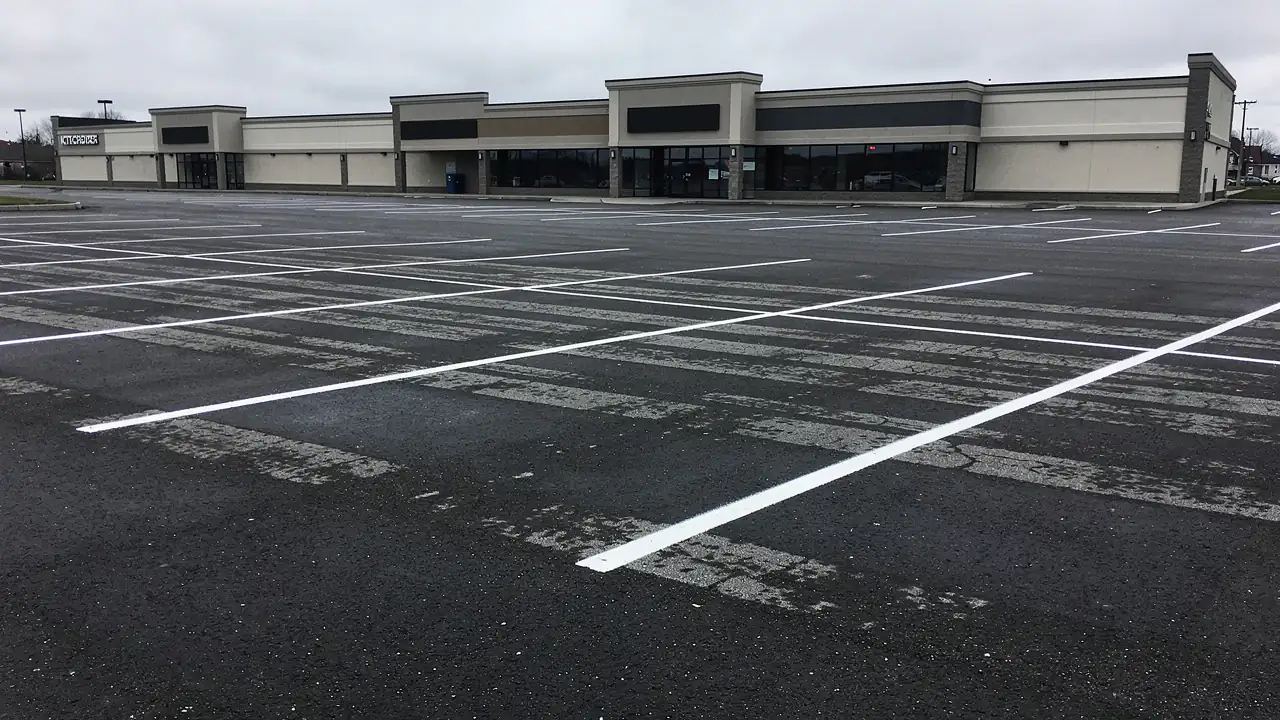
Single and hairpin lines from an old layout, removed before stalls are resized or rotated.
Pavement marking removal
Kitchener Parking Lot Line Painting Pros removes old stall lines, arrows, stencils and hatching from parking lots so drivers only see one set of markings. We grind lines off asphalt and concrete before a re-layout, a change of use or a new accessible stall.
Our removal customers are mostly plaza owners, condo corporations and industrial sites changing how their lot works. Since 2015 we have seen what happens when old lines are simply painted over: by the next spring the ghost layout is back, and drivers park on whichever lines look newest.
Because we are line painters first, the removal is planned around the new layout. We take off only what conflicts, then paint the new markings in the same booking.
What we remove
Pavement marking removal is the mechanical grinding of paint or plastic off the surface so the old marking can no longer be seen or followed. We remove five kinds of markings, almost always as part of a new layout.
Single and hairpin lines from an old layout, removed before stalls are resized or rotated.
Directional arrows, old accessible symbols and text that point drivers the wrong way after a change.
Crosswalks, stop bars and arrows heat-applied years ago, which need slower grinding.
Paint and epoxy lines on concrete parking decks, removed before a garage re-layout.
Hatched no-parking zones and loading boxes that no longer match the building's entrances.
Old fire route lines and stencils when the fire department has approved a new route.
The ghost line problem
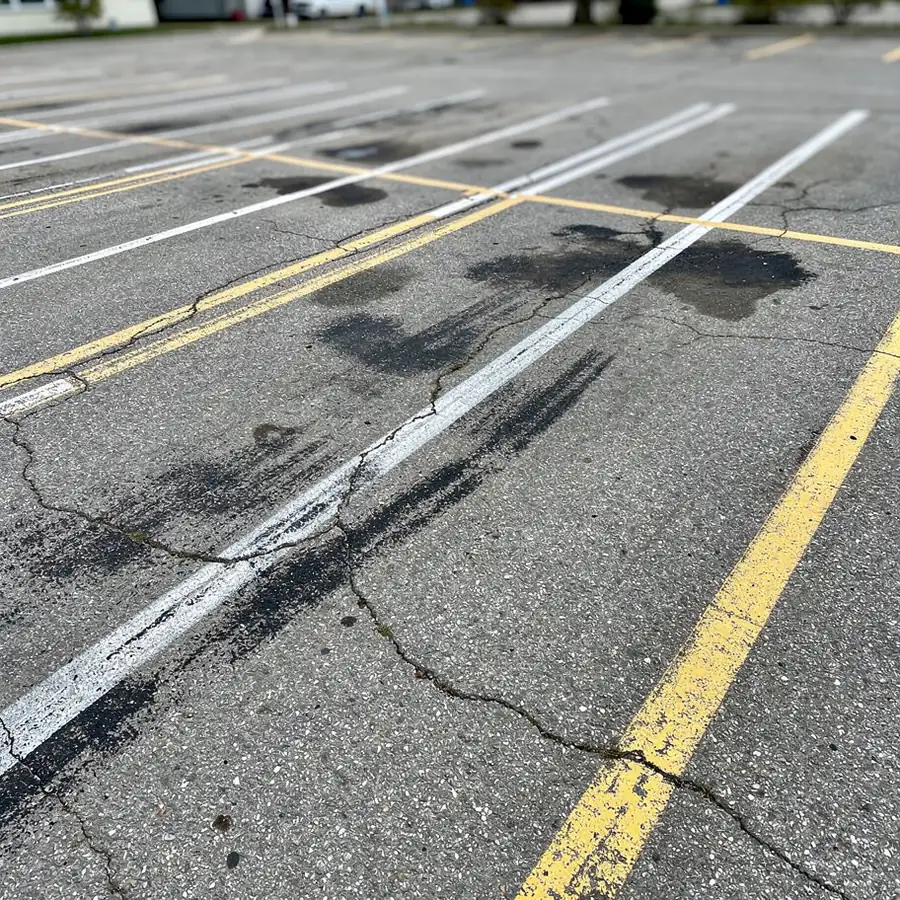
Old lines should be removed because black or grey cover paint wears off within a season, and the original line shows through again. That ghost line is where drivers start parking, not on your new layout.
Painting over also leaves a raised ridge of paint that catches snowplow blades and traps water.
That is why we do not black out lines on any job. Grinding costs more on the day and less over the life of the layout.
Methods
Grinding is the method we use on most Kitchener parking lots, because it removes paint completely and fast on both asphalt and concrete. The other three methods each have a place, and owners often ask how they compare.
Here is an honest side-by-side view of all four.
We use a walk-behind scarifier and grinder, a machine with rotating cutters that chips the paint off the top of the surface. It takes off paint and thin thermoplastic in one or two passes and leaves a light texture where the line was.
Water jets strip paint with very little surface damage, which is why road agencies use truck-mounted units on highways. The equipment and slurry handling make it costly for a typical plaza lot, and we do not run it ourselves.
Shot or sand blasting cleans paint off concrete well, but it throws dust that has to be contained near cars and buildings. It suits concrete more than asphalt.
Covering lines with black paint is the cheapest option and lasts the shortest time. Once plowing and tires wear the cover coat, the old line is back, so we grind instead.
| Method | Surface | Scarring | Dust and debris | Relative cost | Best for |
|---|---|---|---|---|---|
| Grinding or scarifying | Asphalt and concrete | Light texture where the line was | Dry dust, swept up | Moderate | Most parking lot re-layouts |
| High-pressure water blasting | Concrete and asphalt | Least | Wet slurry to collect | Higher | Sensitive concrete, large road jobs |
| Abrasive blasting | Mainly concrete | Light etch | Heavy dust, needs control | Higher | Concrete decks and walkways |
| Black-out paint | Any | None at first | None | Lowest | Not recommended; ghost lines return |
Thick markings
Thermoplastic and epoxy markings take much longer to remove than paint, because they are far thicker and bond harder to the surface. A thermoplastic crosswalk bar can be more than ten times the thickness of a painted stall line.
We grind these in several light passes rather than one deep cut, which protects the surface underneath. Expect removal of thermoplastic stop bars, crosswalks and drive-thru arrows, or epoxy lines on a warehouse floor, to sit at the upper end of our price range.
Our process
Line removal follows five steps, and the first one matters most: deciding exactly which lines go and which stay. On most jobs the new layout is painted immediately after.
We mark every line that is staying with chalk or tape, using the approved layout plan, so nothing is ground by mistake.
A short test strip shows how fast the paint comes off and how much the surface scars before we commit to the whole lot.
The scarifier follows each old line, with cones and caution tape around the work zone.
We sweep and blow off the dust, then check the lot in low-angle light, which shows faint paint the eye misses at noon.
Fresh lines go down on the clean surface through our new parking lot layout service, with a photo report the same day.
Pricing
Line removal by grinding costs $1.50 to $3.00 per linear foot before HST in Kitchener, with a $450 minimum for small jobs. Where your job falls in that range depends on five things.
Our line painting and removal price list shows removal next to layout and restripe rates.
FAQ
These are the questions owners ask most before removing old parking lot lines.
We do not, because black-out paint wears off within a season and the ghost line comes back. Grinding costs more upfront but removes the old marking for good.
Grinding leaves a light texture where the line was, but it does not cut deep into sound asphalt. Light passes and a test patch keep scarring down, and a sealcoat by your paving contractor hides it completely.
Yes, that is how we plan most jobs. Grinding is dry, so once the dust is swept the new layout can be painted the same night, and a small plaza is usually done in one booking.
Free quote
Send a satellite screenshot with the lines you want gone circled, or your new layout plan. We will quote removal and repainting together within 1 business day.