Mon to Sat 7:00am to 9:30pm, Sun 9:00am to 9:00pm

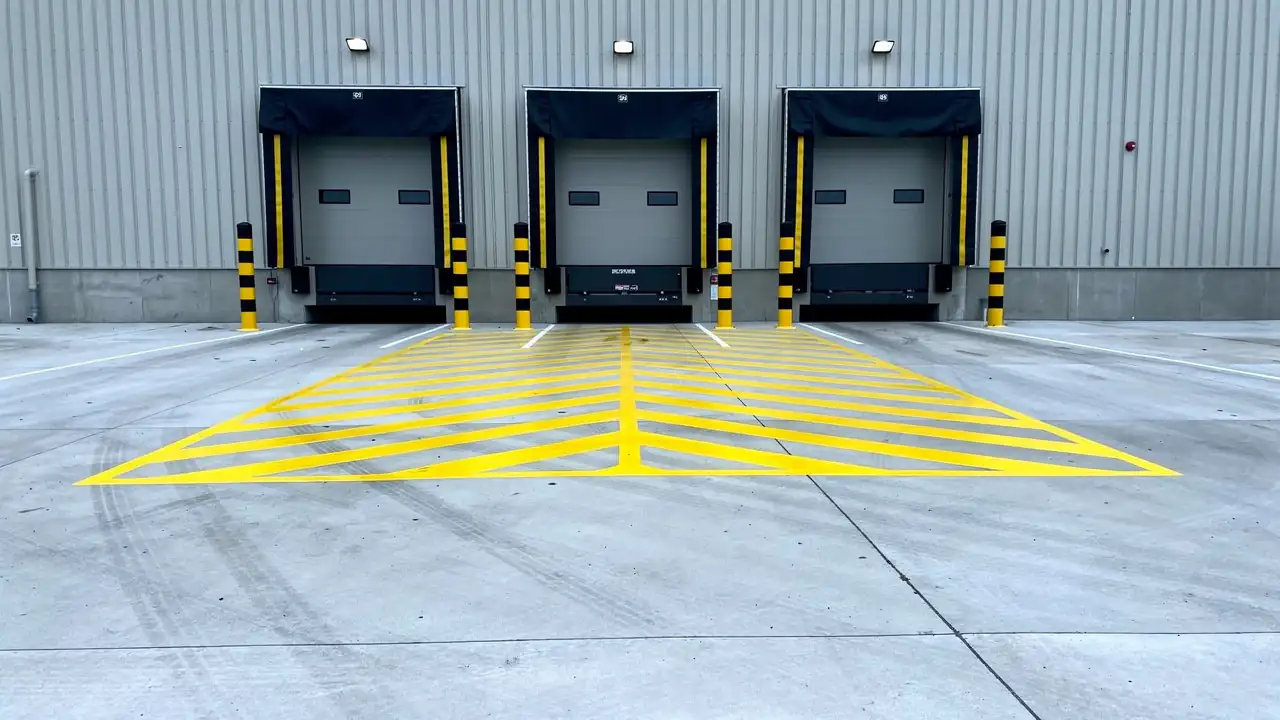
Yellow diagonal hatching at loading dock apron

Hazard and safety markings

Hazard and Warning Markings in Kitchener: Chevrons and Hatching

Kitchener Parking Lot Line Painting Pros paints the hazard markings that tell drivers and workers where not to go: diagonal hatching, chevrons, yellow and black stripes, bollards and curb edges. We mark loading docks, truck courts, plaza islands and warehouse floors across Waterloo Region.

Our clients are plant and warehouse managers, safety coordinators, plaza owners and property managers with a spot where people keep tripping or trucks keep scraping. We have completed more than 550 line painting jobs since 2015, and hazard marking turns up on almost every industrial one.

A good hazard marking system is boring and consistent: one colour means one thing everywhere on the site. That is why we walk the property with you before we quote, so the markings follow how vehicles and people actually move.

Our services

Our Hazard and Warning Marking Services

We paint hazard and warning markings in three settings: outdoor parking lots, industrial yards and indoor floors. Each one uses a different coating and a different reason for marking, so we quote them as separate scopes even on the same site.

Parking Lots and Plazas

Hatched islands, keep-clear zones at entrances and drive-thru exits, painted curb ends and bollards at storefronts.

  • Yellow hatching for no-parking areas
  • Chevrons where lanes merge or split
  • Curb noses painted where cars clip them

Loading Docks and Truck Courts

Dock edges, keep-clear boxes in front of doors, trailer guide lines and pedestrian crossings through the truck court.

  • Yellow and black stripes on dock faces
  • Hatching at dock door approaches
  • Glass beads for night shipping and receiving

Warehouse and Plant Floors

Hazard stripes around equipment, column bases, overhead door tracks and electrical panels on sealed or bare concrete.

  • Two-part epoxy or polyurea coatings
  • Painted on weekends or during shutdowns
  • Colours matched to your safety plan

Conflict points

Where Hazard Markings Prevent Accidents

Hazard markings prevent accidents at the places where a person, a vehicle and an obstacle meet. On most sites that means the same handful of spots, and we look for them on every walkthrough.

  • Loading docks: the drop from the dock edge and the swing of trailers backing in.
  • Bollards and gas meters: low steel posts that disappear behind a pickup's hood.
  • Islands and curb ends: raised concrete that drivers clip when turning at night.
  • Drop-offs and grade changes: retaining wall edges, ramps and step-downs.
  • Transformer pads and dumpster enclosures: zones that must stay clear for service trucks.
  • Pedestrian crossing points: where a walkway from the staff lot crosses a truck lane.

Most of these spots already have a near-miss story attached. If your safety committee keeps an incident log, bring it to the walkthrough and we will mark the worst locations first.

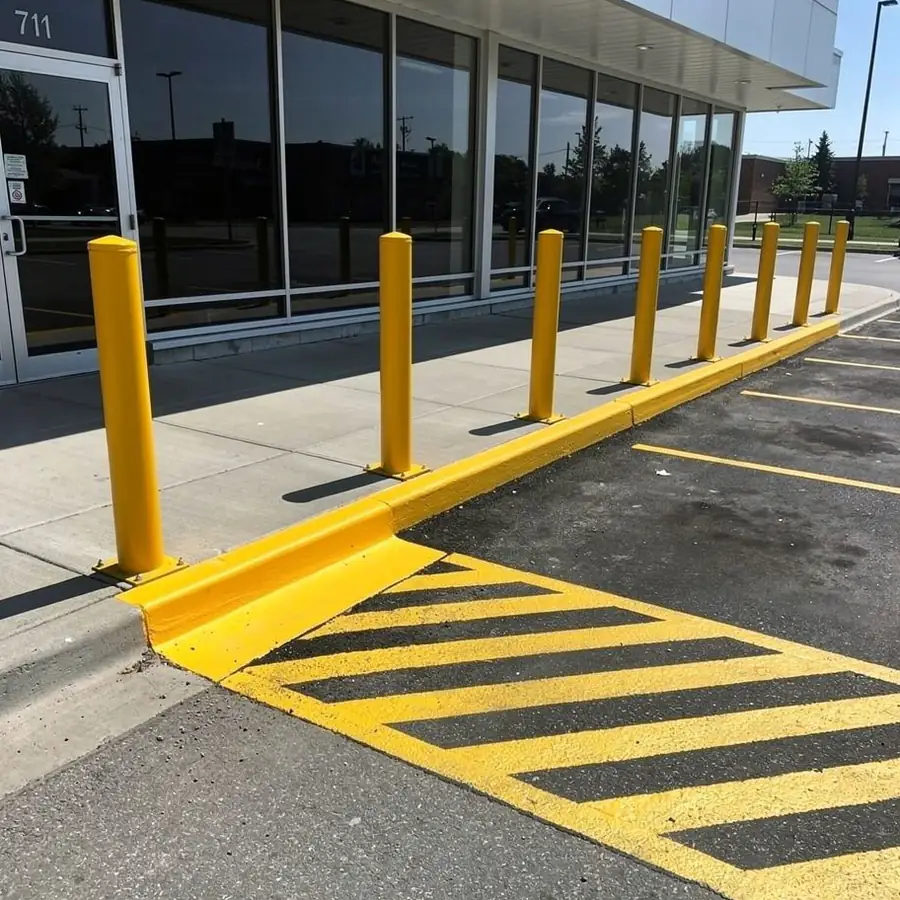
Painted bollards and curb end at plaza

Marking types

Types of Hazard and Warning Markings

There are four main hazard marking types, and each sends a different message: hatching says do not enter, chevrons say which way, striping says danger here, and painted edges say obstacle. Using the right one keeps drivers from guessing.

Diagonal Hatching for No-Parking Zones

Diagonal hatching fills an area with parallel lines at 45 degrees to show it is not for parking or driving. We paint 100 mm (4 in) lines inside a solid border, with spacing tight enough that no one mistakes the area for an empty stall.

Hatched access aisles beside accessible stalls follow different AODA rules, which our accessible parking stall painting service covers.

Chevron Markings

Chevrons are V-shaped bands whose point faces the direction of travel. They tell drivers where two lanes merge, where a ramp begins, or which way to leave a one-way exit.

We set out chevrons with chalk lines first, because a chevron painted slightly off-axis looks like a mistake from a moving car.

Yellow and Black Hazard Stripes

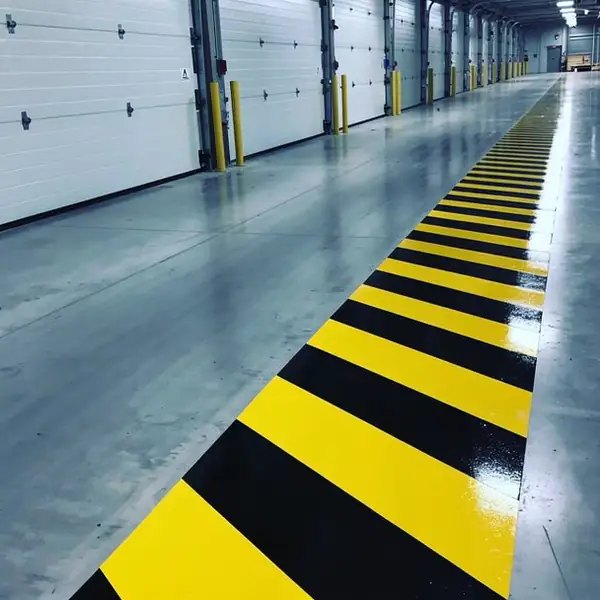
Alternating yellow and black bands at 45 degrees mark something you can hit or fall from. We use them on dock edges, column bases, low beams and the floor around fixed machinery.

The black is painted, not left as bare concrete or asphalt, so the stripe keeps its contrast as the surface weathers.

Bollard and Curb Edge Painting

Bollards and curb ends are low enough to vanish behind a vehicle's hood, so painting them is the cheapest way to stop repeat damage. Steel bollards get a rust-inhibiting primer where the old coat has flaked.

Curb noses at island ends get a solid yellow face, which also helps plow operators find them under snow banks.

MarkingWhat it tells peopleWhere we use it
Diagonal hatchingDo not park, stop or drive hereIslands, gore areas, keep-clear zones, transformer and dumpster pads
ChevronsDirection of travel and a merge or turn aheadRamps, lane merges, speed humps, one-way exits
Yellow and black stripesPhysical hazard you could hit or fall fromDock edges, low beams, equipment guards, column bases
Painted bollards and curbsLow obstacle at the edge of the travel pathStorefront bollards, gas meters, curb noses, island ends

Colours

Colour Conventions for Safety Markings

There is no single Ontario colour code for hazard markings on private parking lots, so the rule that matters most is consistency across your site. Most property owners follow the common conventions below, and we match whichever ones your site already uses.

Yellow for Caution

Yellow marks hazards, no-parking hatching, speed humps and curb ends. It is our default for hazard work because it reads clearly on both asphalt and concrete.

Red for Fire

Red is kept for fire routes, hydrant zones and fire equipment, matching the signs your fire department approved. Our fire route painting service handles those lanes and stencils.

White for Traffic Control

White is used for stall lines, stop bars, arrows and crosswalks. Using it for hazards blurs the line between where to park and where not to go.

Blue for Accessibility

Blue often appears in the International Symbol of Access. Access aisles themselves need high tonal contrast under Ontario Regulation 191/11, which white or yellow on asphalt provides.

Indoor and outdoor

Indoor vs Outdoor Hazard Markings

Outdoor hazard markings use traffic paint, and indoor markings use two-part epoxy or polyurea floor coatings. The surface, the traffic and the season decide which one lasts.

Outside, we spray waterborne acrylic traffic paint from May 1 to October 15, when Canada's 150 g/L VOC cap applies, and can use solvent-based alkyd in the cooler shoulder months. Expect 12 to 24 months before a repaint, or 3 to 6 years if we use preformed thermoplastic for the busiest hatched zones.

Inside, forklift tires grind paint off concrete in weeks, so we use epoxy lines that last 3 to 5 years under lift truck traffic. Indoor work runs year-round as long as the slab is above 10 C and dry.

Floor markings for aisles and racking are covered on our warehouse floor line painting service, and hazard stripes on columns and ramps underground are part of our parking garage line painting service.
Epoxy hazard stripes on warehouse dock edge

Our process

Our Hazard Marking Process

A hazard marking job starts with a walk around the site and ends with a sign-off walk on the same route. In between, each zone is prepped, painted and cured while the rest of the site keeps working.

  1. Walk the Site With You

    We walk the docks, lanes and walkways with your manager or safety lead and note every conflict point, existing colour and incident hot spot.

  2. Mark Up a Site Plan

    You get a marked-up site plan or aerial image showing each hatched zone, chevron and stripe, with a written quote within one business day.

  3. Prep the Surface

    We sweep and blow outdoor areas, degrease oil at dock aprons and grind loose old paint. Indoor concrete is cleaned and abraded so epoxy bonds.

  4. Lay Out and Paint

    Borders are snapped with chalk lines, hatching and chevrons are spaced to a template, and glass beads go into wet paint where docks run at night.

  5. Cure and Sign Off

    Zones stay coned until they are drivable, 30 to 60 minutes for summer traffic paint and longer for epoxy. We walk the site again with you and email before and after photos the same day.

Pricing

Hazard Marking Cost Factors

Hazard hatching and chevrons cost $1.50 to $3.00 per square foot of hatched area before HST. The price depends on the size of each zone, how complex the pattern is, the surface condition, and whether the work is outdoors or on an indoor floor.

Most hazard work is quoted alongside a restripe or floor marking job, and small stand-alone visits fall under our $450 minimum. Our parking lot line painting cost guide has the full rate list.

ItemTypical price before HST
Diagonal hatching and chevrons, outdoor$1.50 to $3.00 per sq ft of hatched area
Single border or warning line, 4 in$0.35 to $0.60 per linear foot
Indoor epoxy hazard lines$1.50 to $4.00 per linear foot
Old marking removal by grinding$1.50 to $3.00 per linear foot
Stand-alone small job$450 minimum charge

Bollards and curb ends are priced per item on the quote, because height, rust and the number of coats vary. Moving a hazard zone means grinding off the old one first, which our parking lot line removal service handles, since painting black over it lets the ghost line come back.

Why us

Why Industrial Sites Trust Us With Safety Markings

Industrial sites trust us because our paperwork arrives before the crew does. Safety coordinators can file our WSIB clearance and insurance certificate the same day they ask.

WSIB Clearance on Request

We keep an active WSIB account and send a current clearance certificate, usually the same day you ask, from WSIB Ontario.

Insurance and Vendor Packages

Commercial general liability certificates name your company as additional insured, and we fill in your supplier forms and safety policy questionnaires.

Safe Work on Live Sites

Crews work behind cones and caution tape in high-visibility vests, follow the Occupational Health and Safety Act and your own site rules.

Work Around Your Shifts

Docks and yards are painted on weekends, planned shutdowns or the quiet shift, zone by zone, so shipping never fully stops.

We serve industrial parks across the region, including the Highway 401 logistics corridor on our Cambridge line painting page and the Hanlon business park covered by our Guelph parking lot line painting service.

FAQ

Hazard Marking FAQs

Short answers to the questions safety leads and property managers ask before booking hazard markings.

What is the difference between hatching and chevrons?

Hatching marks an area where no one should park or drive, while chevrons show the direction of travel. Hatching is parallel diagonal lines inside a border, and chevrons are V-shaped bands that point the way traffic moves.

What colour should no-parking hatching be?

Our standard is yellow for no-parking and hazard hatching on private lots, because it separates no-go zones from white stall lines. If your site already uses white hatching for keep-clear areas, we match it so the whole property stays consistent.

Do hazard markings need reflective beads?

Reflective beads are not required on private property, but we recommend them anywhere hazards are used at night. Loading docks, dim entrances and truck courts with night shipping benefit most, and we drop Type 1 glass beads into the wet paint on request.

Can you paint hazard markings on new asphalt?

Yes, after about 30 days. New asphalt needs that time for its surface oils to cure, though temporary layout lines can go down sooner if the site has to open.

Free quote

Request a Hazard Marking Quote

Tell us where the trouble spots are, or send a site plan with them circled, and we will book a walkthrough or quote from aerial imagery. Written quotes go out within one business day.

  • Walkthrough with your safety lead before we quote
  • Hatching priced by square foot, bollards per item
  • WSIB and insurance certificates sent the same day
Shop
85 West Ave, Kitchener, ON N2M 3A2
Monday to Saturday
7:00am to 9:30pm
Sunday
9:00am to 9:00pm
Call 365-234-5678Free Quote